
Introduction
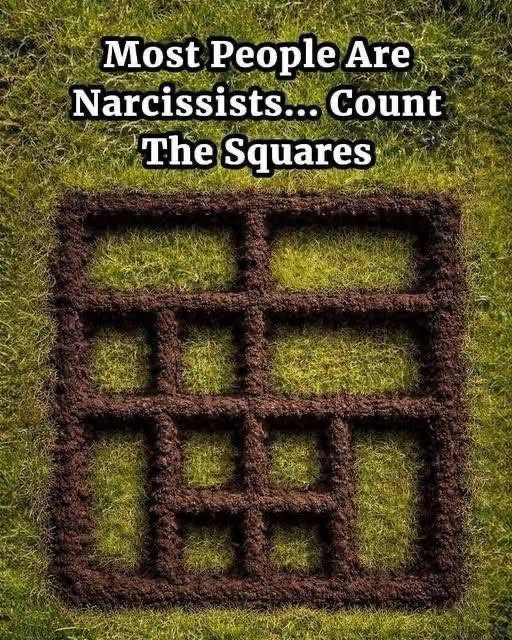
Counting squares and personality-based puzzles are popular brain teasers that challenge the way we observe, think, and interpret information. The Counting Squares and Narcissism Puzzle combines visual reasoning with a reflective twist, encouraging people to look beyond the obvious and consider how perception influences our conclusions.
These types of puzzles are often shared as conversation starters because they are entertaining, thought-provoking, and reveal how differently people approach the same challenge.
Origin and Cultural Significance
Visual puzzles have been enjoyed for centuries as a form of mental exercise, from ancient geometric challenges to modern-day brain games shared online. Counting puzzles became especially popular because they test attention to detail, patience, and logical thinking.
Personality-themed puzzles, including those involving concepts like narcissism, became common in modern psychology discussions and social media. While these puzzles can be fun reflections, they are not scientific tools for diagnosing personality traits.
The Puzzle Concept
A typical Counting Squares puzzle asks:
“How many squares can you find in the image?”
The challenge is not only counting the obvious shapes but also noticing:
- Small squares inside larger ones
- Overlapping sections
- Combined shapes
- Hidden geometric patterns
The “narcissism” element adds a reflective question, often asking people to consider how they view themselves, their attention style, or their problem-solving approach.
How to Solve Counting Squares Puzzles
Step 1: Count the Smallest Squares
Start with the smallest visible squares.
Step 2: Look for Larger Squares
Combine smaller sections to find bigger squares.
Step 3: Check Overlapping Areas
Some squares may be formed by multiple lines crossing.
Step 4: Count Systematically
Write down each group size to avoid counting the same square twice.
Meaning Behind the Puzzle
The deeper message behind these puzzles is about perception.
Two people may look at the same image and notice different things because:
- Attention differs from person to person.
- Experience changes how we interpret patterns.
- Our minds naturally search for familiar structures.
The puzzle reminds us that seeing clearly requires patience and awareness.
Narcissism Reflection
The word “narcissism” is often used casually in puzzle titles, but true narcissism is a complex psychological concept.
A puzzle cannot determine whether someone is narcissistic. However, reflective questions can encourage self-awareness, such as:
- Do I listen to other perspectives?
- Am I open to being wrong?
- Do I value collaboration?
- How do I respond to challenges?
Tips for Success
- Slow down instead of rushing.
- Look at the whole image before focusing on details.
- Use logic instead of guessing.
- Consider multiple perspectives.
- Enjoy the challenge rather than focusing only on the answer.
Description
Counting Squares and Narcissism Puzzles combine visual intelligence with personal reflection. They are designed to entertain while encouraging curiosity, observation, and deeper thinking about how our minds interpret the world around us.
Conclusion
Puzzles like these show that problem-solving is not only about finding the correct answer—it is also about how we approach challenges. They encourage creativity, patience, and self-awareness while providing a fun mental workout.
Recommendation
Try these puzzles with:
- Family members
- Friends
- Classroom groups
- Team-building activities
Discussing different answers can reveal interesting differences in thinking styles and perspectives.
Embracing Healthful Indulgence
Keeping the mind active is an important part of overall well-being. Brain games, puzzles, reading, and creative activities can provide enjoyable ways to relax while strengthening focus, curiosity, and mental flexibility.